

By Olalekan Tunolase Junaid
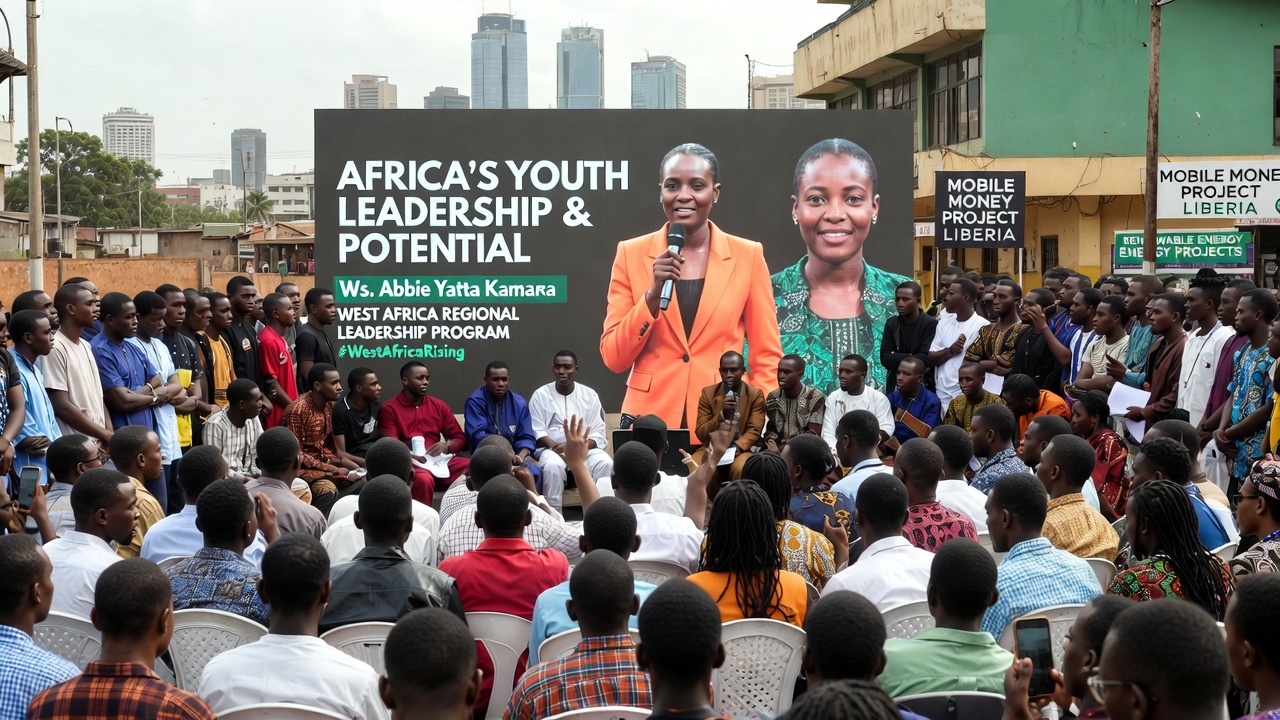
On a humid afternoon in June 2025, 100 young political aspirants from across West Africa gathered in Monrovia, Liberia, for an intensive leadership program that would culminate in a transparent election for their cohort president. The scene was remarkable not for its drama, but for its normalcy. Youth from Liberia, Nigeria, Cameroon, and Sierra Leone debated policy, formed coalitions, and cast ballots with the same gravity as their elders in national capitals. When the Pan African Integration Movement claimed victory with 59.6% of the vote, electing Ms. Abbie Yatta Kamara as their leader, it signaled something profound: Africa’s next generation is done waiting for permission to lead.
This moment encapsulates the central truth of Africa’s current inflection point. With the world’s youngest population, over 70% under age 30, and a median age of just 19.3, the continent stands at a demographic crossroads that no previous generation has faced. Yet the average age of African leaders remains 64.3, with over 72% of them over sixty. This disconnect between the governed and the governing is not merely a statistic; it is the defining challenge of the next decade.
The numbers are staggering. By 2050, Africa will house the world’s largest working age population, a workforce that could either propel the continent to economic dominance or destabilize it through unemployment and disillusionment. Currently, over 53 million young Africans, more than one in five, are neither in work nor education. This is not a future problem; it is a present crisis that requires immediate, visionary leadership.
What makes this moment different from previous eras of African development is the sophistication of the emerging generation. Unlike their predecessors who often operated within rigid political hierarchies, today’s young Africans are building their own tables. They are digital natives who have grown up with mobile money, social media organizing, and global connectivity. Kenya’s mobile money penetration reached 91% in 2025, creating a foundation for AI driven financial tools and digital entrepreneurship that previous generations could scarcely imagine.
This technological fluency translates into political capability. When Gen Z protesters organized across Morocco in September 2025, demonstrating in eleven cities against corruption and misplaced priorities, they used the same digital tools that power their economic lives. The movement known as GenZ 212 did not just challenge the government; it challenged the very notion that leadership must flow through traditional channels.
The wave of youth led protests sweeping Africa in 2025, from Nairobi to Lagos, Accra to Dakar, represents more than frustration. It represents a leadership vacuum. In Madagascar, protests over water and electricity shortages led to the dissolution of the government and the president’s departure. In Kenya, young people faced tear gas and live bullets to demand accountability, resulting in eight deaths but fundamentally shaking the political landscape.
These movements reveal a critical insight: protest is a form of leadership when institutional channels fail. The decentralized, digital organization of these demonstrations, coordinated through TikTok, Facebook, and Twitter, demonstrates that young Africans possess the organizational capacity to lead. What they lack is institutional legitimacy.
The African Union has recognized this imperative, adopting its first 10 Year Strategy on the Social and Solidarity Economy in February 2025, a landmark commitment to inclusive, community embedded economic models. The strategy acknowledges that traditional, top down, donor led development models have reached their limits. Yet implementation requires leaders who can bridge the gap between continental vision and local reality.
Leadership in Africa’s next decade cannot be discussed without addressing its gender dimension. At the G20 South Africa 2025, gender justice was positioned as central to economic policymaking, not as an add on but as an indispensable component of fair and effective capital allocation. This recognition reflects a growing understanding that Africa’s economic transformation requires unlocking the leadership potential of its entire population.
The evidence is compelling. When women lead, capital flows differently. The African Union’s Agenda 2063 explicitly targets full gender parity, with women occupying at least 50% of elected public offices and half of managerial positions. Yet progress remains uneven. The Young Political Leadership School Africa’s cohort 12 election revealed intriguing patterns: more women voted for the male candidate of the Bridge Builders team, while many men voted for the female candidate of the Pan African Integration Movement team. This suggests that gender dynamics in African leadership are evolving in complex ways that defy simple narratives.
What is clear is that the next decade requires leadership that looks like the population it serves. With over 60% of Sub-Saharan Africa’s population under 25, the continent cannot afford to have leadership that does not understand mobile money, climate tech, or the gig economy.
Africa’s most ambitious vision, Agenda 2063, the “Africa We Want,” requires a caliber of leadership that can execute across multiple domains simultaneously. The African Continental Free Trade Area, operational since 2021, could boost intra African trade by more than 50% and fundamentally reshape industrialization. Yet its success depends on leaders who can navigate fragmented regulatory frameworks, underdeveloped financial sectors, and inadequate infrastructure.
The leadership challenge here is structural as much as personal. Recent analysis of African Union Commission reforms reveals that institutional design matters. The merger of political affairs and peace and security into a single mega commission have produced a department where crisis response overshadows accountable governance, conflict prevention and policy foresight. The Continental Early Warning System was literally forgotten in the restructuring, undermining the very foresight that could prevent conflicts before they escalate.
These institutional failures have human consequences. When border governance units disappear just as the AfCFTA requires seamless cross border mobility, or when early warning systems are marginalized during an era of climate induced displacement, leadership is not just about charisma; it is about bureaucratic competence.
2025 has emerged as a crucial bridge year for Africa to assert itself on the global stage. With headline economic growth reaching approximately 3.2%, Africa ranked among the fastest growing regions globally last year. The continent’s vast renewable energy potential, critical mineral wealth, and expanding consumer markets have attracted unprecedented private sector interest. TotalEnergies and Enel Green Power are scaling green energy projects; JP Morgan Chase and Mastercard are establishing substantial presences; the fintech ecosystem has crossed $3 billion in value.
Yet this economic momentum requires leadership that can negotiate from strength rather than supplication. The decline of overseas development assistance, down 7.1% this year, combined with debt distress across multiple African countries, creates both crisis and opportunity. Leaders who can leverage blended finance, diaspora bonds, and public private partnerships will define the decade’s economic trajectory.
The opportunity is immense. Generative AI alone could unlock $100 billion in Africa, while AI overall could double the continent’s GDP growth rate, according to McKinsey analysis. But capturing this value requires leaders who understand that what is needed is not just more funding but a fundamental rethink of how capital is structured, deployed and measured.
The most encouraging development of 2025 may be the emergence of formal leadership pipelines. The African Youth in Politics Forum delivered a clear roadmap for youth leadership, calling for deliberate and systemic changes that create genuine pathways for youth to rise and thrive in political leadership. This includes structured programs that identify, mentor, and equip young political aspirants; institutional reforms that re engineer political parties and parliaments; and legally enforceable quotas for youth representation.
These are not abstract recommendations. The Young Political Leadership School Africa has already trained over 1,200 young leaders from 13 countries, with many now serving in political and civic roles. Five young Africans were named among the 2025 UN Young Leaders for the SDGs, selected from over 33,000 applications worldwide, a testament to the continent’s leadership potential.
From Hafsat Abdullahi in Nigeria using spoken word to promote peace and gender equality, to Jacques Kwibuka in Rwanda empowering youth on sexual health, to Stephane Kulimushi Mutanda using basketball to bridge divides for refugees, these leaders demonstrate that African leadership is already diversifying beyond traditional political office.
As this decade unfolds, Africa faces a choice that will echo for generations. The demographic bulge of youth is not a problem to be managed but a force to be channeled. The technological revolution is not a wave to ride but a tide to direct. The continental integration project is not a dream to defer but a foundation to build.
Leadership will determine which path Africa takes. Not the leadership of strongmen or saviors, but the leadership of systems builders who can design institutions that outlast individuals. Not the leadership of protest alone, but the leadership that transitions from opposition to governance. Not the leadership that waits for external validation, but the leadership that claims Africa’s place in the world on its own terms.
The young people casting ballots in Monrovia, organizing protests in Nairobi, and building fintech startups in Lagos are not asking for permission. They are demanding power, and they are ready to lead. The next decade belongs to those who recognize that Africa’s greatest resource has never been its minerals or its land, but its people, and who have the courage to invest in that resource through visionary, inclusive, and capable leadership.
The world is becoming more African every day. The question is whether Africa’s leadership will rise to meet the moment. Everything depends on the answer.
Olalekan Tunolae Junaid is a pastor, media consultant, and writer with a deep interest in leadership, faith, and Africa’s future. Through his work in ministry, media, and public engagement, he reflects on the moral, spiritual, and cultural foundations required for a thriving African society. He writes to inspire responsible leadership and a renewed vision for the continent.
#AfricaRising #YouthLeadership #AfricanVisionaries #GenZAfrica