

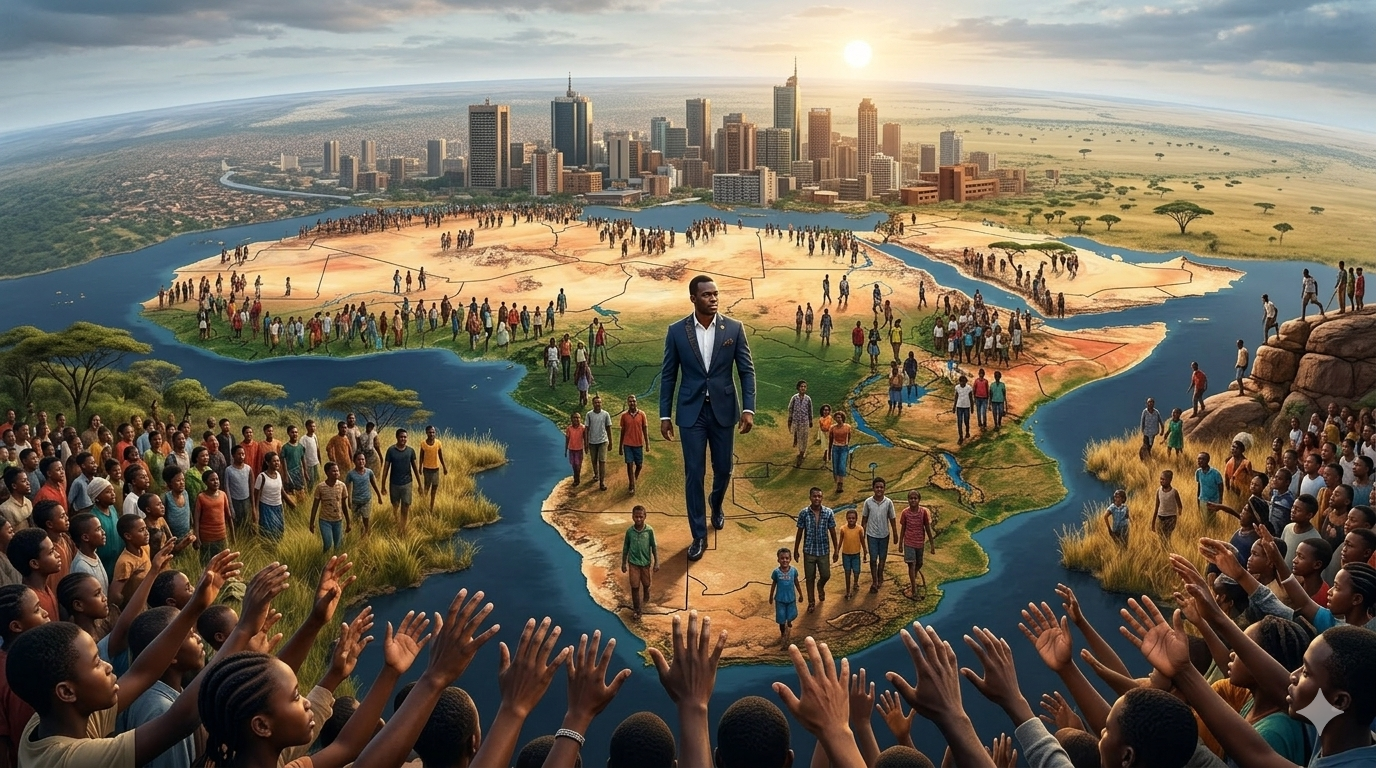
Across the African continent, a powerful conversation is unfolding. It is a conversation about leadership, development, innovation, and the future direction of Africa’s societies and economies. At a time when global dynamics are shifting rapidly, Africa stands at a critical crossroads—one that demands thoughtful leadership and bold ideas.
The continent is home to the world’s youngest population, vast natural resources, and a rapidly expanding digital economy. Yet Africa also faces complex challenges: governance gaps, infrastructure deficits, economic inequality, and the urgent need to create millions of jobs for its growing population.
These realities make one truth increasingly clear: Africa’s future will depend largely on the quality of leadership and the strength of its ideas.
Africa’s economic potential has long been recognized by global observers. Over the past two decades, many African economies have recorded periods of strong growth, urban expansion, and increasing foreign investment.
Major initiatives such as the African Continental Free Trade Area seek to integrate African markets and strengthen intra-continental trade. Technology ecosystems in cities such as Lagos, Nairobi, and Cape Town have demonstrated that African innovation can compete on a global scale.
At the same time, however, progress has often been uneven. Economic gains in some countries have not always translated into broad-based prosperity. Governance challenges continue to affect institutional stability, and development policies sometimes struggle to keep pace with rapidly changing societies.
These tensions between promise and challenge define Africa’s present moment.
History consistently shows that nations rise or stagnate depending largely on the quality of leadership guiding them. Leadership determines how institutions are built, how policies are implemented, and how national resources are managed.
For Africa, leadership is not only about political office. It includes leadership in business, civil society, education, technology, and entrepreneurship.
Visionary leaders are those who understand the long-term needs of their societies—leaders who prioritize strong institutions, economic diversification, and investment in human capital.
When leadership succeeds, nations develop resilience, attract investment, and create opportunities for citizens. When leadership fails, the consequences are equally visible.
The Role of Ideas in Africa’s Development
Beyond leadership itself lies another powerful force: ideas.
The progress of nations has always been shaped by the ideas that guide public policy, economic strategies, and social reforms. From industrial policy to educational transformation, from digital innovation to environmental sustainability, ideas shape the direction of development.
Across Africa, universities, think tanks, entrepreneurs, and policy innovators are generating new thinking about how the continent can accelerate growth and build stronger institutions.
Platforms that encourage thoughtful dialogue about these ideas are essential to Africa’s progress.
Why Platforms for Thoughtful Analysis Matter
Public discourse in many societies today is often dominated by quick reactions, political polarization, and short news cycles. Yet the issues shaping Africa’s future require deeper reflection and informed analysis.
Serious conversations about leadership, economic reform, innovation, and institutional development must be grounded in research, experience, and thoughtful debate.
This is why platforms dedicated to informed civic conversation are increasingly important. They create space for ideas, insights, and perspectives that help societies better understand the challenges and opportunities before them.
Looking Toward Africa’s Future
Africa’s trajectory over the next several decades will be shaped by decisions being made today; decisions about leadership, governance, economic strategy, education, technology, and civic responsibility.
The continent possesses immense potential. But potential alone is never enough. Progress requires leadership capable of transforming opportunities into tangible development outcomes.
If Africa continues to cultivate strong institutions, encourage innovation, and support visionary leadership across sectors, the coming decades could mark one of the most significant periods of transformation in the continent’s history.
The conversation about Africa’s future is only beginning and it is a conversation that demands clarity, courage, and ideas worthy of the continent’s promise.
Olalekan Tunolase Junaid
