

By Junaid Tunolase Olalekan
There is a particular silence that comes before major power shifts in Nigerian politics, not the silence of absence, but the silence of gathering. It is the quiet of a man who has spent two decades moving through the system of state, gathering not just influence but ability, not just contacts but skills.
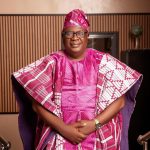
Solomon Olamilekan Adeola, Yayi to the millions who chant his name across market squares in Ogun State, fills this silence with the comfort of a man who has never confused visibility with importance. At fifty-six, he stands at the threshold of Oke Mosan, the Governor’s Office in Abeokuta, not as a newcomer demanding entrance, but as a keeper of gathered political capital finally coming due.
To understand Yayi’s emergence, one must begin where he began: in the dense, working class maze of Alimosho, Lagos. Born on August 10, 1969, at Lagos Island Maternity Hospital to Ayinde Adeola Ogunleye and Abeeni Olasunbo Ogunleye (née Akinola), young Solomon grew up where the dreams of the poor collided daily with the system of survival. His education was modest but meaningful: State Primary School, Alimosho; Community Grammar School, Akowonjo; then onward to Ondo State Polytechnic (now Rufus Giwa Polytechnic) for a Higher National Diploma in Accounting.
The accounting profession would become his first language of power. Twelve years at The Guardian Newspapers, rising to Accountant. Then the disciplined rigour of Olatunji Omoyeni & Co, where he led audit teams and absorbed the detailed art of tracing money. Finally, SOOTEM Nigeria Limited, his own tax consultancy firm, where he learned that wealth, properly understood, is not about gathering but about flow.
This professional training matters. In a political culture that celebrates the sudden windfall and the unexplained fortune, Yayi arrived with spreadsheets and a chartered accountant’s certification from the Institute of Chartered Accountants of Nigeria (ICAN). He understood, long before he sought elective office, that governance is in the end a task in resource allocation.
Yayi’s political education began in seriousness in 2003, when he won election to the Lagos State House of Assembly representing Alimosho Constituency II. It was here, in the progressive laboratory of Asiwaju Bola Ahmed Tinubu’s Lagos, that he learned the magic of legislative power. As Chairman of the House Finance Committee and Joint Chairman of Appropriations, he became helpful in the reform that would transform Lagos from a dependent federal allocation receiver to a self-sufficient sub national economy.
The numbers tell the story: the legislation strengthening the Lagos State Internal Revenue Service that he helped craft catapulted the state’s monthly revenue from a paltry ₦5 billion to over ₦20 billion. He was part of the team that passed the Fiscal Responsibility Act and the Public Procurement Act, legal frameworks that allowed Lagos to access international development financing.
But legislation, Yayi understood, was only half the agreement. The other half was presence. In Alimosho, he became known for the things that do not make headlines but make life possible: boreholes where water had been a mirage, transformers bringing light to perpetual darkness, free medical outreaches for those who could not afford the hospital, classrooms built for children who had learned under trees. He purchased GCE and NECO examination forms for indigent students and sent hundreds of youths for ICT training at NIIT, investments in human capital that would compound over decades.
Yayi’s relationship with Amosun has been more complex and, recently, more disputed. In 2019, when Yayi attempted to contest the Ogun governorship, he actually ran against Amosun’s taking over plan, withdrawing only after intervention by the national leader, Tinubu. Recent reports indicate open conflict between the two senators, with Amosun accusing Adeola of project diversion and Adeola maintaining a respectful silence.
This distinction is crucial. Yayi’s political family line traces not through Amosun’s support but through Tinubu’s Lagos progressive establishment and his own two decade gathering of legislative capital: from Lagos State Assembly (2003 to 2011), to the House of Representatives where he chaired the powerful Public Accounts Committee (2011 to 2015), to two terms as Senator for Lagos West (2015 to 2023), and now as Senator for Ogun West and Chairman of the Senate Committee on Appropriations.
The decision to contest for Ogun West Senatorial District in 2023 was not, as critics suggested, the taking advantage pivot of a Lagos politician seeking new territory. It was a homecoming. Yayi’s roots are in Ogun State: his father from Ago Ishaga, Pahai, Ilaro in Yewa Land; his mother from Kemta, Abeokuta. The Yewa Awori people had never produced a governor since Ogun State’s creation in 1976, and the late Awujale of Ijebuland, Oba Sikiru Adetona, had pronounced it their turn.
Yayi won convincingly, and what followed has been a demonstration of governance as performance art, except the performance is measured in concrete and kilowatts, not rhetoric. In just two and a half years as Senator for Ogun West, he has facilitated over 100 roads and bridges, constructed 150 classrooms, established ICT centres, built health facilities, and upgraded the Federal Polytechnic Ilaro to a Federal University of Technology.
The YAYI Scholarship Scheme has expanded from 1,500 beneficiaries in 2023/24 to 5,000 in 2024/25, covering students across all three senatorial districts of Ogun State with bursaries ranging from ₦100,000 to ₦200,000. His free medical outreaches have targeted 10,000 constituents, while his empowerment programmes have reached 15,000 market women and men with cash grants, 50,000 farmers with inputs and system, and 20,000 youths with vocational training.
When he distributed 102 electric transformers across 435 Community Development Areas in all three senatorial districts, including Ogun East and Central, he was practicing a politics of inclusion that transcends the zero-sum calculations of regional entitlement.
The governorship of Ogun State in 2027 represents both opportunity and paradox for Yayi. The opportunity is demographic and historical: the Yewa Awori people, after nearly five decades of being left out, have come together around his candidacy as the carrier of their delayed dream. The paradox is political: his principal rival for the APC ticket is the incumbent Governor Dapo Abiodun, whose taking over plans remain deliberately opaque.
Yayi’s response to this tension has been characteristic: measured, respectful, yet unyielding. When supporters attacked other aspirants on social media, he issued a personal statement urging restraint: “I have not made any official statement regarding any aspirant’s aspiration or responded to the unprovoked media attacks on my person and my political career of service to the people”. He congratulated Abiodun on his emergence as Chairman of the Southern Governors’ Forum, calling him “a visionary leader whose stewardship has transformed Ogun State”.
This is the politics of the long game: never confusing the office with the mission, never allowing tactical disagreement to become strategic enmity. Senate Majority Leader Opeyemi Bamidele has endorsed him, stating that “Ogun State deserves continuity in development, and Yayi is the right man for the job”. President Tinubu, under whose tutelage Yayi matured politically, remains a quiet but potent ally.
There is a danger in Yayi’s current trajectory: the danger of premature coronation, of a movement so broad it becomes unwieldy, of expectations so high they cannot be met. The “Yayi Everywhere You Go” slogan that has become everywhere in Ogun State captures both his strength and his weakness: the promise of omnipresence, the burden of being able to do everything.
His critics, particularly Iyabo Obasanjo, daughter of the former president, have called him an “opportunist” who “has never supported anybody from the West”. The charge sticks to the extent that all ambitious politicians are opportunists; the question is whether they convert opportunity into substance.
Yayi’s record suggests he does. The boreholes in Alimosho that still flow. The revenue architecture of Lagos that still generates. The scholarships that have sent thousands to school. The transformers that have brought light to darkness. These are not the memorials of a man who confuses politics with performance; they are the evidence of a man who understands that governance is the slow, unglamorous work of making life slightly less difficult for ordinary people.
In Achebe’s beliefs, the leopard does not change its spots; it merely reveals what was always there. Solomon Olamilekan Adeola, accountant, legislator, senator, aspirant, has spent twenty two years in political office revealing himself. The consistency is the message: from the finance committees of Lagos to the appropriations chair in Abuja, from Alimosho boreholes to Ogun West scholarships, he has been the same man, making the same bet that ability, gathered over time, eventually becomes undeniable.
The 2027 governorship race in Ogun State will test this idea. It will test whether the politics of preparation can defeat the politics of support, whether the quiet work of decades can overcome the loud system of being in office. For the Yewa Awori people, it is a test of whether their delayed dream can finally find flesh. For Nigerian democracy, it is a test of whether the long game still matters.
Yayi stands at the center of these coming together tests: not as a revolutionary, but as a someone who restores; not as an outsider, but as a man who has spent his life inside the system of power, learning its gears and levers. The lion’s paw has been shown. Whether it carries the strength to claim the territory is the question that will define Ogun State’s next chapter.